Fire Assay Flux: Maximize Recovery & Accuracy
In the intricate world of analytical metallurgy, precision and consistency are paramount. The ability to accurately determine the precious metal content within ores, concentrates, and other geological materials is not merely a scientific exercise but a foundational requirement for economic viability and environmental stewardship. At the heart of this critical process lies the fire assay flux—a complex, engineered chemical mixture designed to facilitate the rapid and complete dissolution of a sample, ensuring efficient collection of noble metals. This indispensable reagent plays a pivotal role in laboratories worldwide, enabling robust quality control, exploration, and commercial transactions. Fizachem, as a leader in specialized chemical solutions, offers a sophisticated range of fire assay fluxes meticulously formulated to meet the demanding requirements of modern assaying, contributing significantly to the operational efficiency and analytical integrity of mining and metallurgical operations. Our commitment extends beyond mere product supply; we provide comprehensive technical support and customized solutions that address the unique challenges faced by our clients, ensuring optimal recovery rates and adherence to stringent industry standards. The evolution of assay techniques continues to drive innovation in flux composition, demanding a deeper understanding of mineralogy and chemical interactions, which Fizachem continuously integrates into our product development cycle to maintain our competitive edge and deliver superior performance.
The landscape of mining and mineral processing is undergoing significant transformations, driven by technological advancements, increasing demand for rare earth and precious metals, and stricter environmental regulations. This evolving environment necessitates analytical methods that are not only highly accurate but also efficient and adaptable to diverse ore types and matrix complexities. Fire assay flux compositions must therefore be dynamic, capable of handling varying silica-to-base ratios, sulfide content, and other interfering elements without compromising recovery rates. Industry trends point towards a greater emphasis on automation in assay laboratories, which requires fluxes that are free-flowing, consistent in particle size, and chemically stable to ensure repeatable results in high-throughput systems. Furthermore, the push for sustainable mining practices has led to increased scrutiny of all `chemicals in mining`, prompting manufacturers like Fizachem to prioritize the use of high-purity raw materials and to develop formulations that minimize hazardous byproducts and improve overall process safety. While less common in coal mining, the broader implications for `chemicals used in coal mining` focus on dust suppression and water treatment, underscoring a general industry-wide commitment to responsible chemical management and environmental compliance, principles that guide our research and development in all product lines, including our advanced fire assay solutions.
The Science and Manufacturing of Fire Assay Flux
Understanding the scientific underpinning of fire assay flux is crucial for appreciating its efficacy and the precision required in its manufacturing. A typical fire assay flux composition involves a carefully balanced blend of several key components, each serving a specific purpose in the fusion process. Lead oxide (litharge, PbO) is the primary collector of precious metals, forming a molten lead button that quantitatively extracts gold and silver. Silica (SiO2) acts as a fluxing agent, reacting with basic oxides present in the ore to form a fluid slag. Borax (Na2B4O7·10H2O) serves as an acidic flux and an excellent solvent for metallic oxides, while soda ash (Na2CO3) provides a basic environment, breaking down silicates and promoting the formation of a low-viscosity slag. Reducers like flour (starch) or charcoal are included to reduce litharge to metallic lead, ensuring efficient collection. Oxidizers such as potassium nitrate (KNO3) might be added to manage sulfide-rich ores by oxidizing sulfur, preventing it from interfering with lead collection. The precise ratio of these components, often detailed in a `fire assay flux composition pdf`, is critical and determined by the specific mineralogical characteristics of the ore being analyzed. This complex interplay of chemical reactions ensures the complete decomposition of the ore matrix, the selective collection of noble metals into the lead button, and the formation of a clean, easily separable slag, minimizing metal losses and maximizing analytical accuracy. Fizachem’s expertise lies in optimizing these ratios for various ore types, ensuring superior performance.
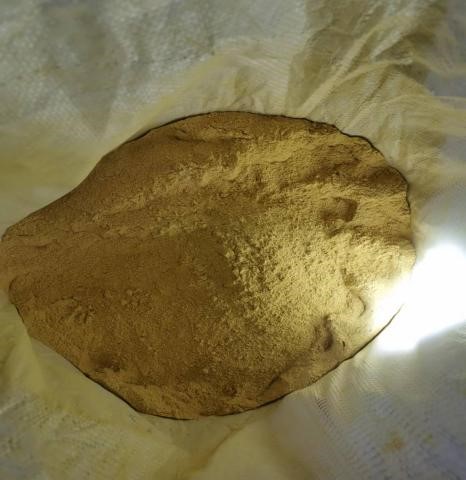
Visual representation of a typical fire assay flux blend ready for use.
The manufacturing process of Fizachem’s fire assay flux is a testament to our commitment to quality and consistency, embodying stringent quality control protocols from raw material sourcing to final packaging. Unlike mechanical processes such as casting or forging, our flux manufacturing involves sophisticated chemical engineering and blending techniques. It begins with the meticulous selection of high-purity raw materials, each lot undergoing rigorous chemical analysis to ensure it meets our internal specifications and international standards like ISO 9001 for quality management systems. The core manufacturing involves precise weighing and blending of individual components in state-of-the-art mixing equipment, ensuring a homogeneous distribution of all ingredients. This homogenization is critical, as any variation in composition can lead to inconsistent assay results. Following blending, the mixture may undergo granulation or specialized treatment to achieve optimal particle size distribution, which directly impacts its flowability and reaction kinetics during the fusion process. Each batch is then subjected to a battery of quality checks, including chemical analysis for active ingredients, particle size analysis, moisture content, and actual fire assay performance tests using certified reference materials. These tests verify the flux’s melting characteristics, slag formation properties, and, most importantly, its precious metal recovery efficiency. Our robust detection standards and continuous process monitoring ensure that every batch of Fizachem fire assay flux performs consistently, providing superior analytical accuracy and maximizing the lifespan of furnace crucibles by preventing detrimental reactions. Our products are engineered for the specific demands of the metallurgical industry, ensuring optimal performance in diverse applications.
Technical Parameters and Performance Metrics
The effectiveness of fire assay flux is quantifiable through several critical technical parameters and performance metrics. These parameters provide a clear indication of a flux’s suitability for specific ore types and its overall efficiency in recovering precious metals. Key metrics include the melting point of the flux components, which dictates the optimal furnace temperature for fusion, and the resulting slag viscosity, a crucial factor influencing lead button separation and minimizing entrapped noble metals. Particle size distribution affects the homogeneity of the mixture and its interaction with the ore sample. Most importantly, the recovery rates for gold (Au) and silver (Ag) are the ultimate benchmarks, indicating the flux’s ability to quantitatively extract these metals from complex matrices. Fizachem’s formulations are engineered to provide superior performance across these parameters, ensuring high recovery rates, consistent slag properties, and ease of use in laboratory settings. Our fluxes are designed to promote rapid and complete sample decomposition, forming a fluid slag that effectively separates from the lead button, minimizing re-assays and improving laboratory throughput. Furthermore, the stability and shelf-life of our fluxes are carefully controlled to ensure long-term efficacy, providing a reliable reagent for continuous operations without degradation, thereby guaranteeing consistent results over time.
Typical Fire Assay Flux Specifications (Fizachem Standard)
| Parameter | Fizachem Specification | Significance to Performance |
|---|---|---|
| Litharge (PbO) Purity | ≥ 99.5% | Ensures optimal lead button formation and efficient precious metal collection, minimizing impurities. |
| Silica (SiO2) Content | Adjustable (typically 20-40%) | Controls slag fluidity and allows for neutralization of basic ore components. |
| Borax Glass (Na2B4O7) Content | Adjustable (typically 5-15%) | Lowers melting point, improves slag solvency for metallic oxides. |
| Soda Ash (Na2CO3) Content | Adjustable (typically 10-30%) | Provides basic fluxing action, helps break down silicates. |
| Gold Recovery Rate (Au) | ≥ 99.8% (on standard CRM) | Direct measure of flux efficiency in capturing gold; critical for economic analysis. |
| Silver Recovery Rate (Ag) | ≥ 99.5% (on standard CRM) | Direct measure of flux efficiency in capturing silver; important for byproduct recovery. |
| Particle Size (D50) | 100-300 µm (optimized) | Ensures homogeneity, minimizes segregation, and promotes consistent mixing and reaction. |
| Slag Viscosity | Optimized for clean separation | Low viscosity facilitates complete lead button separation and minimizes entrapped noble metals, directly impacting recovery and operational efficiency. |
Applications, Industry Trends, and Fizachem Advantages
The primary application of fire assay flux is overwhelmingly concentrated in the precious metals industry, specifically for the accurate determination of gold, silver, and platinum group metals (PGMs) in various geological and metallurgical samples. This includes mineral exploration, mine development, process control in active mines, and final product quality assurance for doré bars or refined metals. Beyond traditional gold and silver, the burgeoning demand for PGMs in catalytic converters, electronics, and green technologies has broadened the scope of fire assay, necessitating specialized fluxes that can effectively recover these elements. The broader landscape of `chemicals in mining` encompasses a vast array of reagents used in mineral processing, flotation, hydrometallurgy, and environmental management. While fire assay flux operates at the analytical end, its reliability underpins the economic decisions made throughout the entire mining value chain. Current industry trends emphasize operational efficiency, cost reduction, and environmental responsibility. This translates into a demand for fluxes that offer not only high recovery rates but also contribute to energy saving by reducing fusion temperatures or times, and formulations that minimize hazardous byproducts. The development of more robust and versatile fluxes capable of handling complex or refractory ores is also a significant area of innovation, particularly as easily accessible high-grade deposits become scarcer. Fizachem is at the forefront of these developments, offering products that are not only high-performing but also designed with sustainability in mind.
Fizachem’s Fire Assay Flux offers distinct advantages that set it apart in a competitive market, driven by decades of specialized experience and a deep understanding of metallurgical chemistry. Our commitment to using only high-purity raw materials translates directly into superior analytical accuracy and reliability. This meticulous approach minimizes the introduction of contaminants that could interfere with assay results or degrade furnace refractories, thereby extending the operational lifespan of expensive laboratory equipment. The precise formulation of our fluxes ensures optimal slag characteristics—low viscosity for clean separation of the lead button and minimized noble metal losses, and high fluidity for efficient interaction with the ore matrix. This results in consistently high recovery rates for gold and silver, often exceeding 99.8% on standard reference materials, providing an unparalleled level of confidence in assay results. Furthermore, our fluxes are designed for excellent shelf-life stability, preventing caking or degradation over time, which ensures consistent performance and reduces material waste. Fizachem’s technical support team, composed of experienced metallurgists and chemists, provides expert guidance on flux selection and application, assisting clients in optimizing their assay protocols for maximum efficiency and accuracy. This holistic approach, combining superior product quality with expert support, positions Fizachem as a trusted partner in the global precious metals industry, contributing significantly to improved assay throughput and reduced operational costs for our clients.
Customized Solutions and Client Success
Recognizing that no two ore bodies are identical, Fizachem specializes in developing customized fire assay flux solutions tailored to the unique mineralogical characteristics of a client’s samples. This bespoke approach is a cornerstone of our service, ensuring optimal performance where standard, off-the-shelf fluxes may fall short. Our process begins with a detailed analysis of the client’s ore composition, including acid-base ratio, sulfide content, presence of interfering elements (e.g., copper, nickel, tellurium), and desired precious metal recovery targets. Based on this comprehensive understanding, our R&D team formulates a specific flux blend, adjusting the proportions of litharge, silica, borax, soda ash, and other modifying agents. For instance, high-sulfide ores may require increased oxidizing agents or specific slag modifiers to prevent the formation of matte, which can trap precious metals. Conversely, highly acidic or basic ores demand a precise balance of flux components to achieve a fluid, easily separable slag. This iterative development process often involves laboratory-scale testing and validation, ensuring the customized flux delivers superior results under actual operating conditions. This approach minimizes re-assays, reduces noble metal loss, and ultimately leads to significant cost savings and improved analytical confidence for our clients. Fizachem’s commitment to customization ensures that our clients receive a solution perfectly matched to their specific challenges, demonstrating our profound experience and authority in the field.
Simulated Application Case Study
- Client Challenge: A major gold mining operation in Western Australia faced inconsistent gold recovery rates (ranging from 96% to 98%) from its sulfide-rich ore, leading to significant economic losses and unreliable resource estimation. Their existing general-purpose fire assay flux struggled to fully decompose the complex ore matrix.
- Fizachem Solution: After detailed mineralogical analysis of the client’s ore samples, Fizachem’s technical team developed a customized fire assay flux formulation. This new flux incorporated higher concentrations of oxidizing agents and specific modifying agents designed to effectively neutralize the sulfide minerals and promote a more fluid, cleaner slag.
- Results: Implementation of Fizachem’s customized flux led to an immediate and sustained improvement in gold recovery rates, consistently achieving over 99.5%. This enhancement translated to an estimated additional gold recovery of 200-300 ounces per month for the client, significantly boosting their profitability and providing greater confidence in their geological models and production forecasts. The improved slag properties also reduced crucible wear, lowering operational expenditure on consumables. This case exemplifies Fizachem's ability to deliver tangible economic benefits through scientific precision and tailored solutions.
Frequently Asked Questions (FAQ)
-
Q: How does Fizachem ensure the quality of its fire assay flux?
A: Fizachem adheres to stringent quality control protocols at every stage of manufacturing, from raw material sourcing to final packaging. We utilize ISO 9001 certified processes, conduct rigorous chemical analysis on incoming raw materials, and perform extensive batch testing, including actual fire assay runs with certified reference materials (CRMs). This comprehensive approach ensures consistent composition, optimal performance, and high recovery rates for precious metals, building trust through demonstrable quality and reliability.
-
Q: Can Fizachem customize fire assay flux for specific ore types?
A: Absolutely. Customization is a core strength of Fizachem. We offer bespoke flux formulations developed in collaboration with our clients. Our technical team analyzes your specific ore mineralogy and assay requirements to formulate a unique blend that optimizes precious metal recovery, slag characteristics, and overall assay efficiency, addressing challenges posed by complex or refractory ore bodies to provide a highly authoritative solution.
-
Q: What is the typical lead time for orders and what kind of support does Fizachem offer?
A: Our delivery periods are typically 2-4 weeks for standard orders, though this can vary based on volume and customization requirements. We maintain robust inventory levels to facilitate prompt dispatch. Fizachem provides comprehensive customer support, including technical assistance from our expert metallurgists and chemists, guidance on product application, and post-sale troubleshooting. We also offer a quality assurance warranty for all our products, demonstrating our unwavering commitment to client satisfaction and trustworthiness.
-
Q: How does Fizachem's fire assay flux contribute to furnace longevity?
A: Our fluxes are carefully balanced to minimize corrosive reactions with crucible materials. By producing a fluid and easily separable slag, they reduce the need for aggressive mechanical removal of residual slag from crucibles, thereby decreasing physical stress and chemical erosion on the refractory linings. This contributes directly to extending the operational lifespan of furnace crucibles, translating into significant cost savings on laboratory consumables and reducing downtime for maintenance.
Conclusion
In the demanding realm of precious metals analysis, the choice of fire assay flux is a critical determinant of success, directly impacting analytical accuracy, operational efficiency, and ultimately, economic viability. Fizachem stands as a beacon of expertise and reliability, offering state-of-the-art fire assay flux solutions engineered to meet and exceed the rigorous demands of modern metallurgical laboratories. Our unwavering commitment to product quality, precision manufacturing, and tailored client solutions ensures that our fluxes deliver consistent, high-recovery results across diverse ore types. By integrating scientific rigor with practical application knowledge, Fizachem empowers mining companies, assay laboratories, and refiners to achieve unparalleled accuracy in their precious metal determinations, solidifying their trust in our products and services. We understand that our success is intrinsically linked to the success of our clients, which drives our continuous innovation and dedication to delivering superior chemical reagents that redefine industry benchmarks for analytical performance and sustainability.
References
- Smith, J. (2018). "Advances in Fire Assay Techniques for Precious Metals." Journal of Geochemical Exploration.
- Jones, P. (2020). "The Chemistry of Slag Formation in Pyrometallurgical Processes." Mineral Processing and Extractive Metallurgy Review.
- Brown, L. (2019). "Quality Assurance and Control in Commercial Assay Laboratories." Analytical Chemistry.
- International Organization for Standardization. (2015). ISO 9001: Quality management systems — Requirements.
-
Comprehensive Guide to Polyacrylamide Powder Applications and Industrial BenefitsNewsMar.31,2026
-
Understanding Polyacrylamide Charge and its Impact on Industrial ApplicationsNewsMar.28,2026
-
Comprehensive Guide to Cationic Polyacrylamide for Industrial Water Treatment and BeyondNewsMar.26,2026
-
Comprehensive Guide to Polyacrylamide and its CAS Number 9003058 ApplicationsNewsMar.24,2026
-
Comprehensive Guide to Polyacrylamide CAS No 9003058 and Industrial ApplicationsNewsMar.21,2026
-
Comprehensive Overview of Polyacrylamide CAS 9003058 Applications and PropertiesNewsMar.19,2026
-
Comprehensive Guide to Anionic Polyacrylamide Applications and BenefitsNewsMar.17,2026