Understanding Sodium Chloride Solution Boiling Point Elevation and its Applications
Understanding the Boiling Point of Sodium Chloride Solution
The boiling point of a sodium chloride solution is a fundamental concept in chemistry, particularly relevant in various industrial processes and laboratory experiments. It deviates from the boiling point of pure water due to a phenomenon known as boiling point elevation, a colligative property. This article will delve into the factors influencing this elevation, explore its calculations, practical applications, and safety considerations. Understanding these aspects is crucial for accurate scientific work and process control.
What is Boiling Point Elevation?
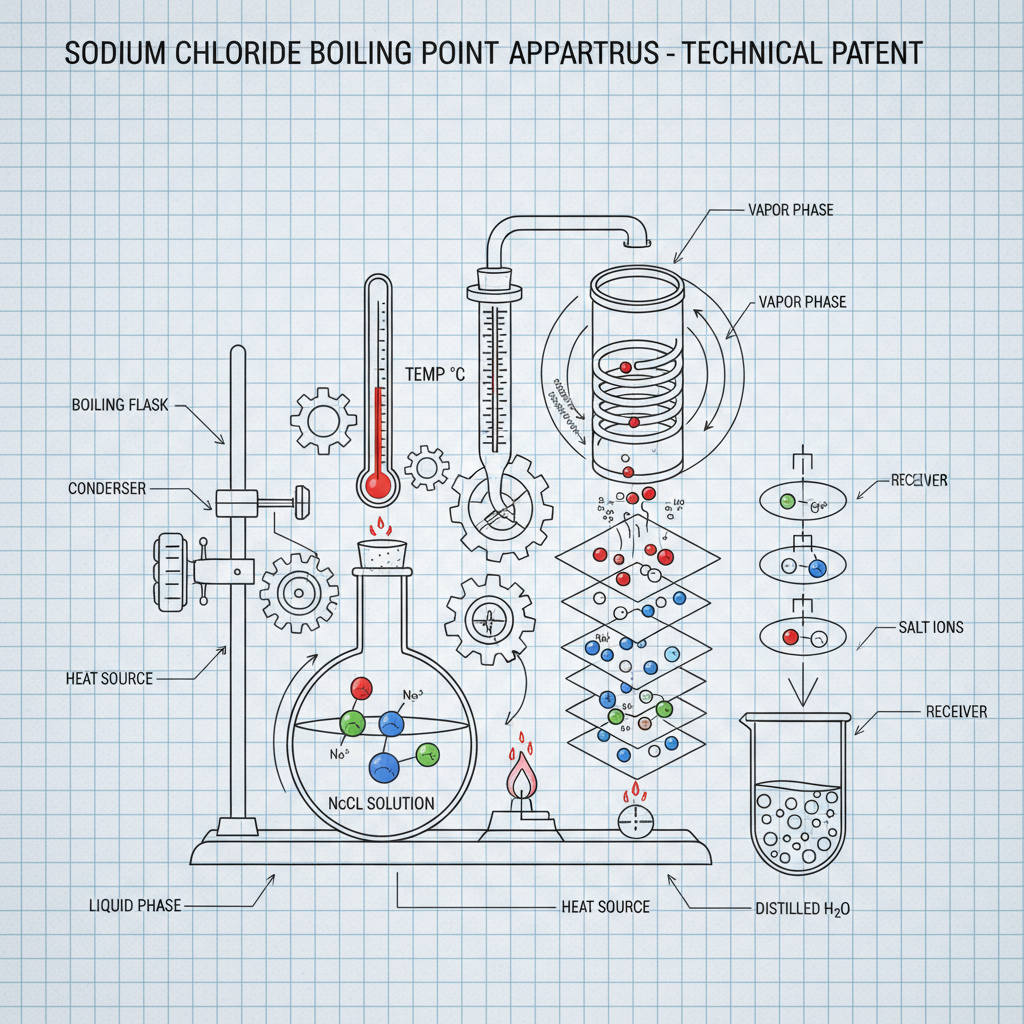
Boiling point elevation is the increase in the boiling point of a solvent when a solute, like sodium chloride (NaCl), is added. This happens because the presence of the solute lowers the vapor pressure of the solvent. More energy (heat) is required to reach the point where the vapor pressure equals the atmospheric pressure, which is the definition of the boiling point. This is a colligative property, meaning the elevation depends on the concentration of solute particles, not their identity. Therefore, a solution with a higher NaCl concentration will have a greater boiling point elevation than a solution with a lower concentration.
Factors Affecting the Boiling Point of Sodium Chloride Solution
Several factors influence the boiling point of a sodium chloride solution. The primary factor is the molality of the solution – the number of moles of solute per kilogram of solvent (water, in this case). The higher the molality, the greater the boiling point elevation. Additionally, atmospheric pressure plays a role; lower atmospheric pressure results in a lower boiling point. The type of solute also matters indirectly – NaCl dissociates into two ions (Na+ and Cl-) in water, contributing to a higher effective concentration of particles and a larger elevation than a non-dissociating solute. Finally, impurities in the water or NaCl can slightly alter the boiling point.
Key Takeaways: Molality, atmospheric pressure, solute dissociation, and the presence of impurities all contribute to the boiling point of a sodium chloride solution.
Calculating Boiling Point Elevation for Sodium Chloride Solution
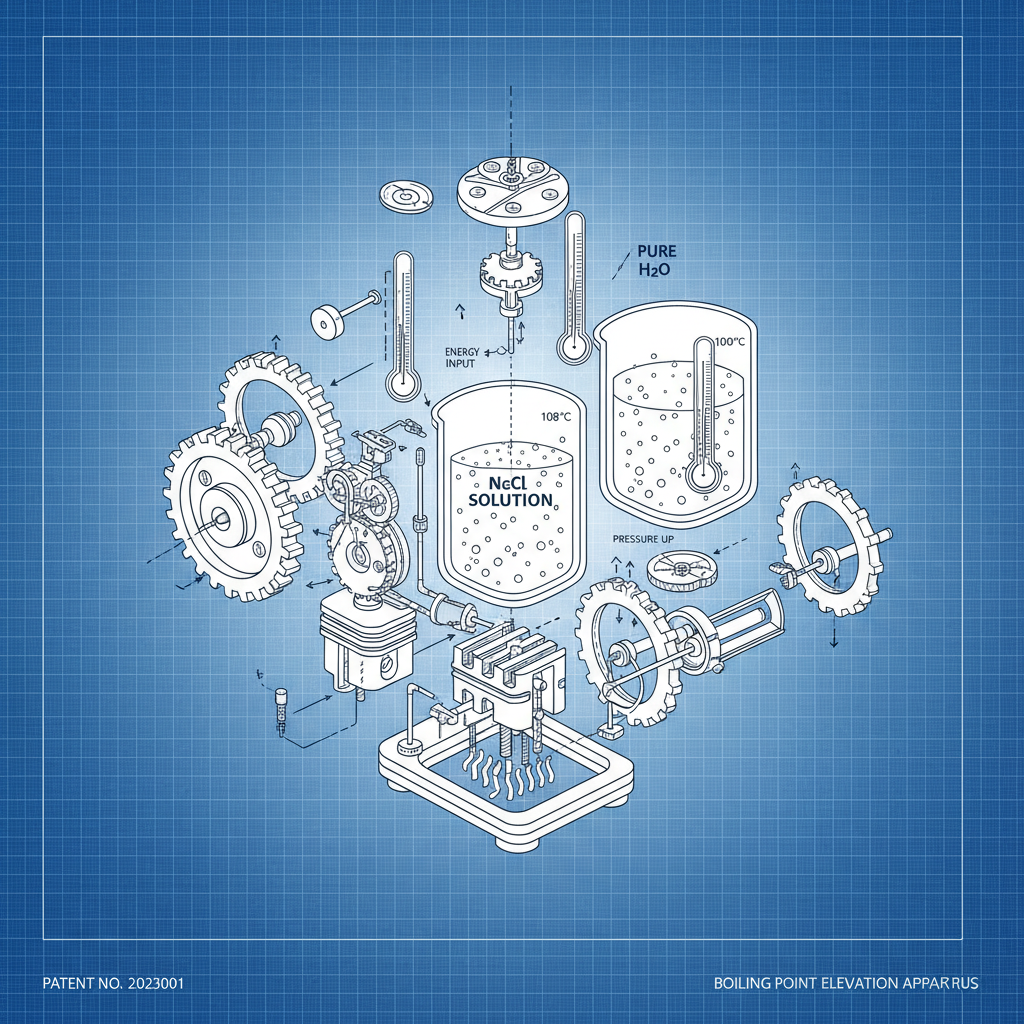
The boiling point elevation (ΔTb) can be calculated using the following formula: ΔTb = Kb m i. Where: Kb is the ebullioscopic constant of the solvent (water, Kb = 0.512 °C·kg/mol), m is the molality of the solution, and i is the van't Hoff factor, representing the number of particles the solute dissociates into when dissolved (for NaCl, i = 2). For example, a 1 molal NaCl solution will have a boiling point elevation of approximately 1.024 °C. Therefore, if pure water boils at 100 °C, a 1 molal NaCl solution would boil at approximately 101.024 °C. It's important to use the correct units to ensure accurate calculations.
Practical Applications and Importance
Understanding the boiling point of sodium chloride solutions is vital in several applications. In the food industry, it's crucial for accurately determining cooking times and ensuring proper food preservation. In chemical laboratories, it’s essential for controlling reaction temperatures and preventing unwanted side reactions. Industrial processes like desalination and brine manufacturing rely heavily on precise boiling point control. Furthermore, this principle is applied in antifreeze production, where adding solutes lowers the freezing point and raises the boiling point of the coolant, extending its operating range.
Safety Considerations When Working with Boiling Salt Solutions
When working with boiling sodium chloride solutions, several safety precautions must be observed. Always wear appropriate personal protective equipment (PPE), including heat-resistant gloves, safety goggles, and a lab coat. Be mindful of potential splattering or boiling over, and use caution when handling hot liquids. Ensure adequate ventilation to avoid inhaling any steam. Never add cold water to a hot solution, as this can cause violent boiling. Always follow established laboratory safety procedures and consult the Safety Data Sheet (SDS) for NaCl before handling the chemical.
Conclusion
Understanding the boiling point of a sodium chloride solution is critical for various scientific and industrial applications. By considering factors such as molality, atmospheric pressure, and the van't Hoff factor, we can accurately predict and control boiling points, ensuring safe and efficient processes. Fizachem provides high-quality sodium chloride and other chemical compounds for your research and industrial needs.
Frequently Asked Questions (FAQs)
What is the typical boiling point of a 3.5% NaCl solution (like seawater)?
A 3.5% NaCl solution, closely resembling seawater, has a boiling point slightly above 100°C. Accurately calculating it requires determining the molality of the solution. However, it typically boils around 100.8 – 101°C at standard atmospheric pressure. This is due to the dissolved salts elevating the boiling point compared to pure water. The exact temperature will vary slightly depending on the precise concentration and atmospheric pressure.
Does the type of container affect the boiling point?
While the container itself doesn't directly alter the boiling point elevation, it can influence the observed boiling point. Heat transfer efficiency varies with the material and shape of the container. A container with poor heat conductivity may lead to localized overheating and uneven boiling. It's essential to use appropriate glassware or containers designed for heating and ensure adequate mixing to promote uniform temperature distribution.
How does atmospheric pressure affect the boiling point of sodium chloride solution?
Boiling point is directly related to atmospheric pressure. Higher atmospheric pressure requires a higher temperature to reach the boiling point, while lower atmospheric pressure allows for boiling at a lower temperature. This is why water boils at a lower temperature at high altitudes. The boiling point elevation caused by the NaCl solution is added to this pressure-dependent boiling point. Therefore, the effect of NaCl on boiling point elevation is more pronounced at higher pressures and less pronounced at lower pressures.
-
Comprehensive Guide to Polyacrylamide Powder Applications and Industrial BenefitsNewsMar.31,2026
-
Understanding Polyacrylamide Charge and its Impact on Industrial ApplicationsNewsMar.28,2026
-
Comprehensive Guide to Cationic Polyacrylamide for Industrial Water Treatment and BeyondNewsMar.26,2026
-
Comprehensive Guide to Polyacrylamide and its CAS Number 9003058 ApplicationsNewsMar.24,2026
-
Comprehensive Guide to Polyacrylamide CAS No 9003058 and Industrial ApplicationsNewsMar.21,2026
-
Comprehensive Overview of Polyacrylamide CAS 9003058 Applications and PropertiesNewsMar.19,2026
-
Comprehensive Guide to Anionic Polyacrylamide Applications and BenefitsNewsMar.17,2026